

- ✓ Open 24 hours, 7 days a week
- ✓ Serving San Francisco County, San Mateo County, Santa Clara County and 74 more areas
Make a repeatable visual check part of your property-care routine, and write down anything that has changed. Keep the task simple: look at accessible areas, note what you can actually see, and prepare questions rather than trying to diagnose a problem yourself.
SOS Restoration Of San Francisco is IICRC Certified and offers water damage restoration, mold remediation, fire and smoke damage restoration, and other restoration services. Those are confirmed business details. A particular inspection schedule, certification specialty, or technical prevention procedure is not specified here.
For everyday property care, the recommendation in this guide is deliberately modest: build a consistent observation habit. Use it to organize your attention—not as a substitute for an assessment or a guarantee against damage.
Choose a Routine You Can Repeat
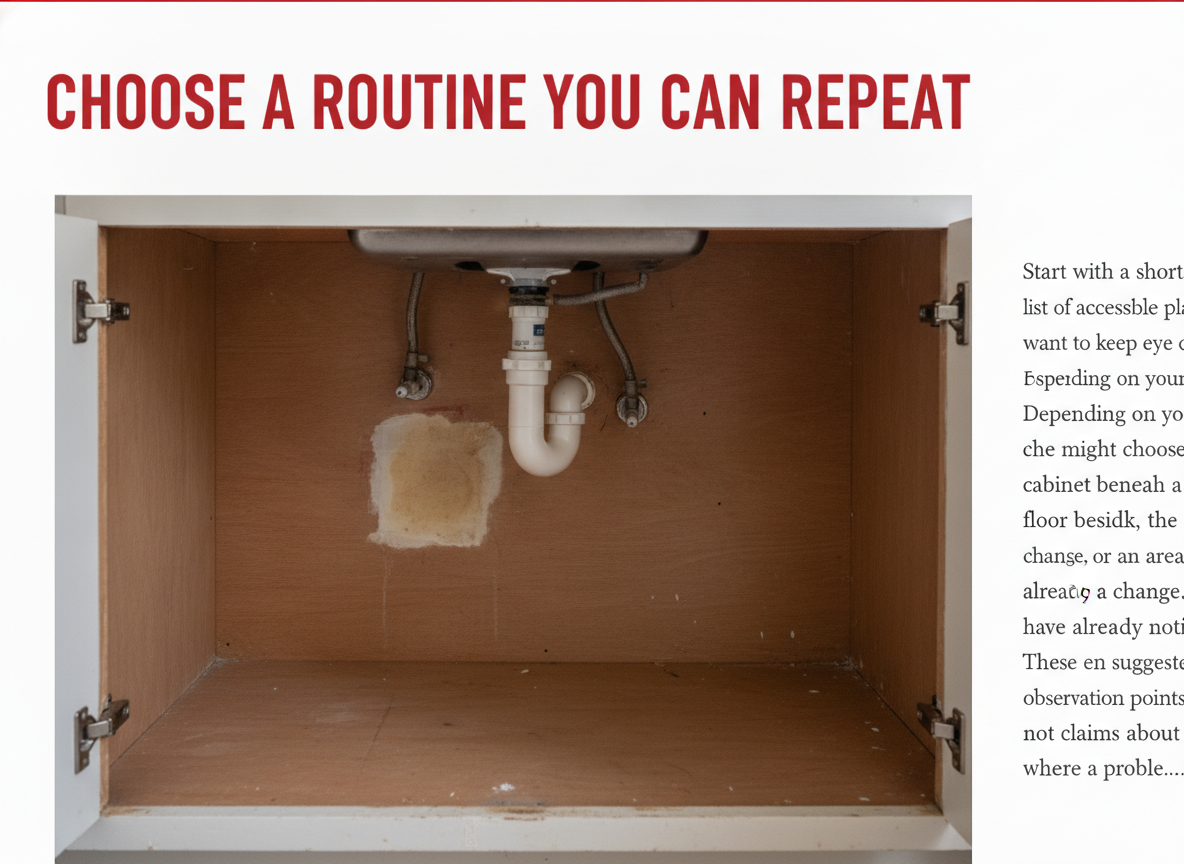
Start with a short list of accessible places you want to keep an eye on. Depending on your property, you might choose the cabinet beneath a sink, the floor beside an appliance, or an area where you have already noticed a change.
These are suggested observation points, not claims about where a problem exists in your property. You do not need to treat every mark as damage or every unfamiliar condition as an emergency.
Choose a reminder that fits your routine. This guide does not prescribe a weekly, monthly, or seasonal interval: no property-specific maintenance schedule has been provided. Instead, make the check manageable enough that you can repeat it consistently.
Write down three things before you begin:
Where you will look:
Use the same location names each time.
What you will record:
Visible changes, dates, and questions.
What is outside the check:
Concealed spaces, dismantling, testing, and repairs.
That last boundary matters. Keep this an observation task rather than turning it into an investigation you are not prepared to carry out.
Describe the Condition Before Naming the Problem
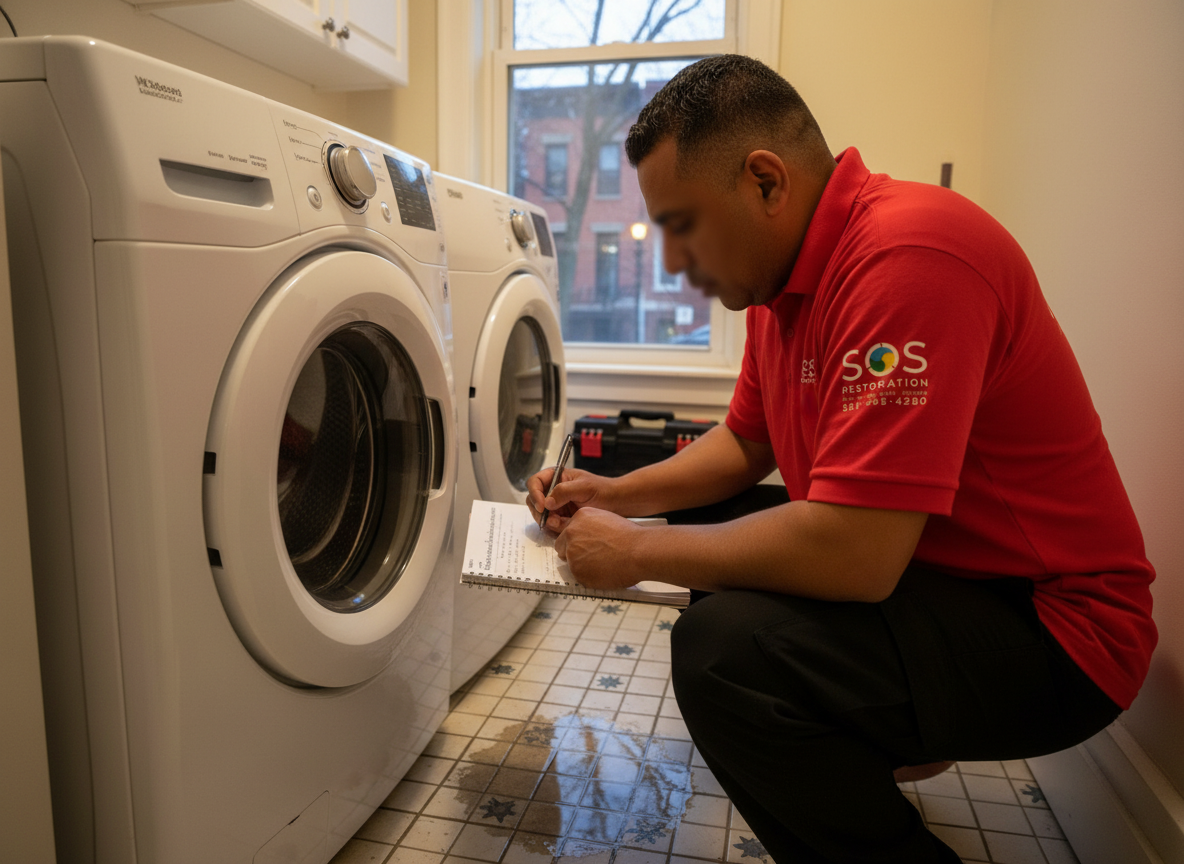
During each check, aim for a plain description. Separate what you observe from what you suspect.
For example, you could write:
“There is a dark mark on the inside panel of the cabinet. I first noticed it today. I do not know what caused it.”
That is a more precise record than:
“There is mold from a plumbing leak.”
The second statement assigns both a diagnosis and a cause. Unless those have been established, keep them as questions instead.
Use the same approach for other concerns. Record an odor as an odor, a mark as a mark, and visible water as visible water. You do not have to decide which restoration service applies before asking for help.
Keep a Small Property-Care Log
Use a notebook or a note on your phone. Avoid creating a system so elaborate that maintaining it becomes another unfinished task.
For each observation, record:
Date:
When you noticed the condition.
Location:
The room and the specific surface or object.
Observation:
What you can see or otherwise directly notice.
Comparison:
Whether it appears different from your previous record.
Question:
What you want clarified.
Next step:
Whether you plan to check your maintenance instructions, contact an appropriate professional, or request restoration assistance.
If you choose to take photographs, use them as part of your record—not as proof of a diagnosis. Try to include enough context to identify the location, alongside a closer view of the condition.
Do not put yourself at risk to complete a log entry. Leave inaccessible areas outside the scope of this routine.
Use a Change as a Prompt for a Question
The purpose of the habit is not to make you your own restoration technician. It is to give you a clear point at which to stop guessing and ask what to do next.
Useful questions include:
- “I noticed this condition on this date. Is this something your services address?”
- “What information would you like me to provide before discussing the next step?”
- “Do you need an assessment before recommending work?”
- “What should I avoid doing while I arrange appropriate help?”
If you are unsure whether an area is safe to approach, do not make a closer inspection part of your routine. Seek appropriate guidance instead. This article does not provide hazard-clearance or emergency-entry instructions.
Where IICRC Certification Fits
Treat certification and everyday property care as two separate parts of the conversation.
SOS Restoration Of San Francisco is IICRC Certified. The specific certification categories, certificate identifiers, and applicable technical standards are not detailed here. Do not read the certification statement as a property-specific diagnosis or a promise that one maintenance habit will prevent damage.
When discussing possible work, ask how the company’s certification relates to the service being proposed. You can also ask what the assessment will cover and what information you should have ready.
For your own routine, keep the objective narrower: notice, record, and ask. Leave technical conclusions out of your notes unless they have been established.
When to Ask SOS Restoration Of San Francisco About Its Services
SOS Restoration Of San Francisco offers water extraction, structural drying, flood cleanup, sewage cleanup, mold remediation, fire and smoke damage restoration, smoke odor removal, and contents cleaning and restoration. Commercial damage restoration, storm damage repair, disaster cleanup, and rebuild services are also available.
The business is locally owned and operated, licensed, insured and bonded, and offers 24/7 Emergency Response. Its service area includes San Francisco County, San Mateo County, Santa Clara County, Alameda County, and Contra Costa County.
If you want to discuss whether a concern falls within those services, call 415-625-8863. Describe the condition and ask about the appropriate next step. A response-time guarantee is not provided here.
The Habit to Keep
Keep your property-care routine short, consistent, and factual. Look only where you can do so safely, record changes without assigning a cause, and ask for guidance when the next step is unclear.
The goal is not a flawless checklist. It is a repeatable way to pay attention without confusing observation with diagnosis.
Frequently Asked Questions
Is SOS Restoration Of San Francisco IICRC Certified?
Yes. IICRC Certified is included in the company’s confirmed business information. Specific certification categories and certificate identifiers are not provided here.
How often should I perform a visual check?
No property-specific inspection interval is provided. Choose a repeatable reminder for your observation routine, and use applicable maintenance instructions or professional guidance for technical schedules.
Can my notes or photographs establish what caused a problem?
Do not treat this routine as a diagnostic process. Record what you observe and ask an appropriate professional about the cause and next steps.
Does SOS Restoration Of San Francisco offer emergency response?
Yes. The business offers 24/7 Emergency Response and is open 24 hours every day. Call 415-625-8863 to discuss assistance; no guaranteed arrival time is stated here.
Does the company work with insurance?
Yes. SOS Restoration Of San Francisco works with all insurance and offers direct insurance billing. Policy-specific coverage and claim outcomes are not provided here.